// macOS · 2026
SupremeNotch
A native macOS app that turns the MacBook notch into a status bar, an AI-agent console and a scratch space.
- Swift
- SwiftUI
- AppKit
- Rust
- macOS internals
- Claude Code hooks
- Codex
- Product design
- Interaction design
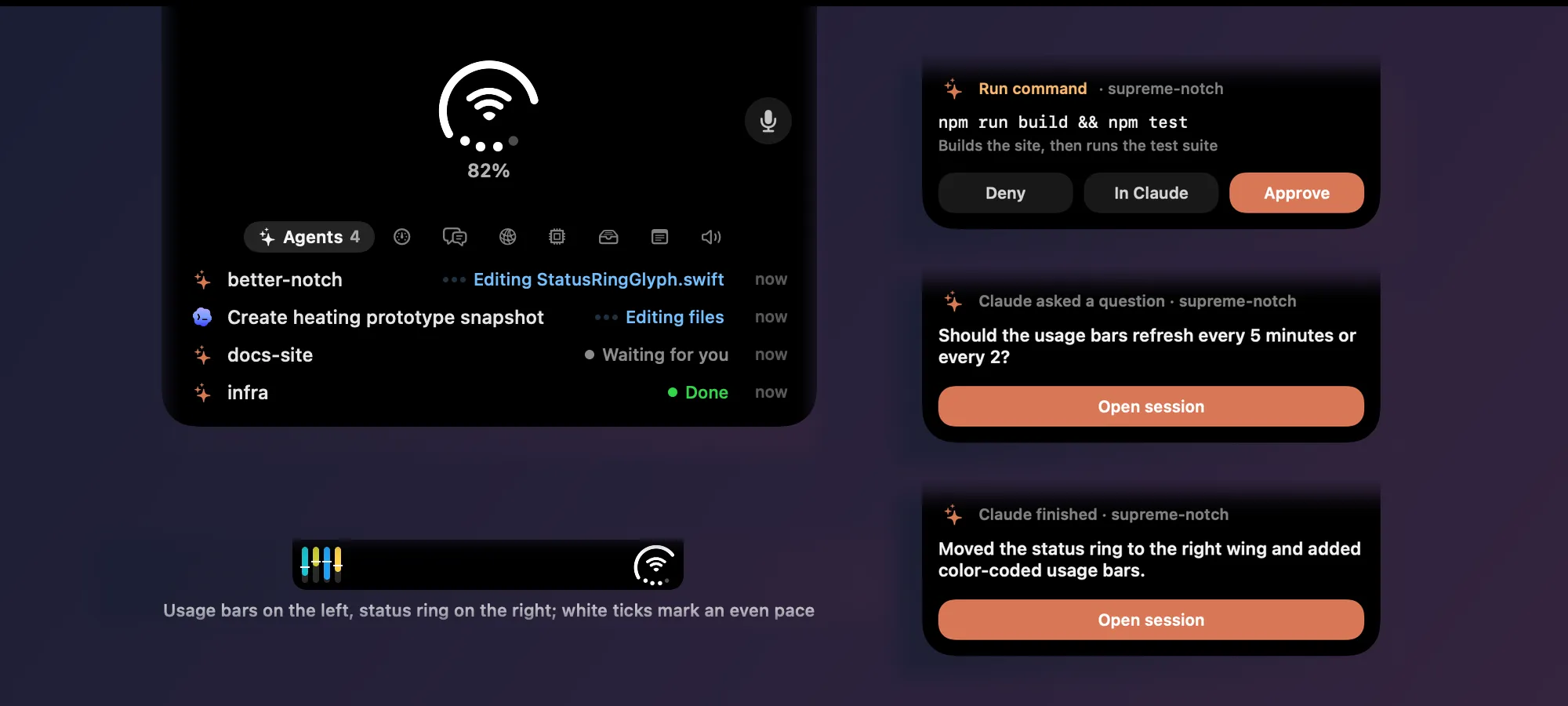
The MacBook notch is a black rectangle in the most valuable spot on the screen. SupremeNotch puts it to work: a glanceable status bar when it’s closed, and a small control surface when you hover over it — built around working with several AI coding agents at once.
Why
Running Claude Code and Codex sessions in parallel creates a new kind of background noise. Which agent is waiting on me? Which one finished? How much of my usage limit is left before it resets? That lived across terminals, apps and dashboards. I wanted it somewhere I’d see without looking.
What it does
- Agent console — approve or deny tool requests, answer questions and reopen finished sessions, straight from the notch. Works with Claude Code, Codex and Cursor.
- Usage bars — one bar per Claude and Codex limit beside the camera, warming in colour as you use it, with a pace tick showing whether you’re ahead of an even spend until reset.
- Status ring — battery, network and volume in a single glyph.
- Tabs — Agents, Usage, Ask, Ports, System, Shelf, Note and audio Output.
- Glances — meeting reminders with a Join button, network changes, AirPods battery, downloads, Focus, brightness and volume.
How it’s built
Native Swift and SwiftUI, with AppKit underneath for the overlay windows, Now Playing access and system monitoring. Usage data comes from a small Rust helper I first wrote as a standalone terminal app, now bundled inside the app, with credentials in the Keychain.
Much of the work is pixel-level. Glyphs sit exactly as far from the camera as from the notch’s edge, the island resizes symmetrically between tabs, and alerts grow from the wing they belong to. A layout check renders sample alerts in the real island and fails if the spacing drifts — and the screenshots here are drawn by the app’s own views, so they never go stale.
Everything runs locally, with no telemetry. Releases are built, signed with a Developer ID and notarized by a single script.
Credit where it’s due
SupremeNotch began as a fork of the open-source Notchly (MIT). Nearly every original file has since been reworked, and the agent console, usage bars, status ring, Ask tab, layout checks and release tooling are new — well over 13,000 lines of Swift on top of the original.
Gallery
Closed — usage bars on the left, status ring on the right, muted mic beside the camera